
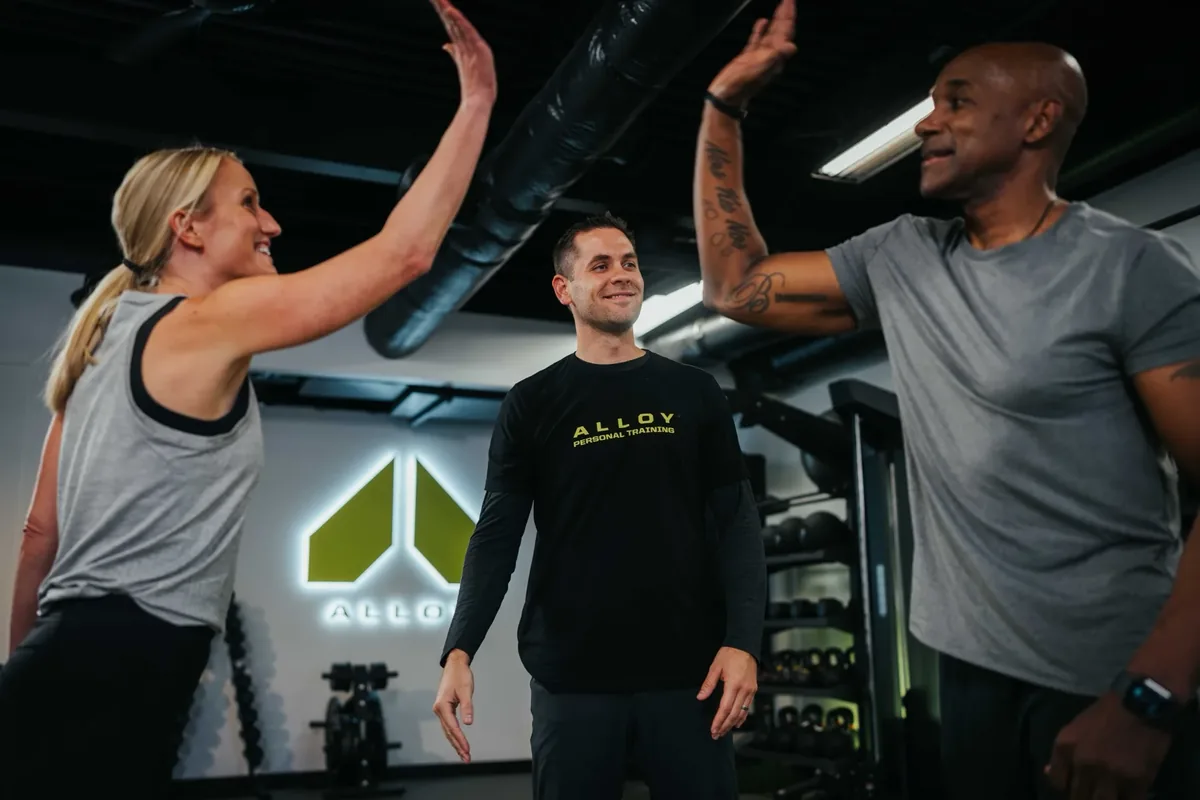
If your main goal is to show up and move, a group fitness class can serve you well. If your goal is to get measurably stronger, especially past 40, you need a coach who watches your reps and adjusts your plan week to week. Small group personal training is built to give you both.
That's the clean split in the research. Group settings help people show up. Supervision and individualized progression help people get stronger. A large class delivers the first. Small group personal training keeps both. Training alone from a self-guided printout tends to deliver neither.
The choice matters because most adults aren't strength training enough. The American College of Sports Medicine (ACSM) reports that fewer than 30% of U.S. adults meet the recommended guidelines for muscle-strengthening activity.
Where a class ends and a small group begins
ACSM's annual fitness-trends survey defines group training as in-person classes "involving more than five participants." That's a useful line to draw. In practice, up to that point one coach can realistically track every person. Past it, the session drifts toward one workout delivered to a room.
A cap of six sits right at that threshold. It's the smallest room that still counts as a group by ACSM's definition, and it's small enough for one coach to see every rep. That reasoning is behind the six-person cap at Alloy Personal Training Colorado Springs, and it's the real dividing line between the two formats. You can read more about how small group personal training runs day to day.
In a class, the instructor leads one workout for everyone. In a small group, everyone trains together, but each person's exercises, loads and modifications come from their own personalized program.
What group classes genuinely do well
Classes earn their popularity. The music, the set start time and the people around you give you a reason to walk through the door, and the research backs that up.
In a 12-week controlled study, people who took group fitness classes reported significantly lower perceived stress and better physical, mental and emotional quality of life than when they started. People who exercised alone showed no significant change except in mental quality of life. The participants were young medical students and weren't randomly assigned, so treat this as a signal rather than proof. Still, it matches what most class regulars will tell you.
Who you train with matters too. In one large community trial, 627 adults ages 65 to 91 were randomly assigned to same-age or mixed-age exercise classes, each enrolling roughly 18 to 21 people. Those placed with others their own age attended more sessions than those in mixed-age classes, at both 12 and 24 weeks, and attendance was objectively tracked. Training alongside people in the same season of life seems to keep people coming back.
The catch: a class isn't automatically a group
This is the part most comparisons skip. A 2006 meta-analysis by Burke and colleagues pooled 44 studies and sorted group exercise into two kinds. "True groups" were built for cohesion, with the same people working toward shared goals and getting to know one another. Standard exercise classes were people exercising in the same room.
True groups outperformed everything else. Standard classes, on the other hand, did no better than home exercise paired with some support contact.
That's a fair warning if you're choosing a class for accountability. A drop-in class where the faces change every week can feel social without carrying the benefits researchers tie to real groups. A small, steady cohort with the same coach is much closer to what Burke's team called a true group. A simple test: if someone notices when you miss a Tuesday, you're in one. More on that in our post on fitness accountability.
What individual supervision adds
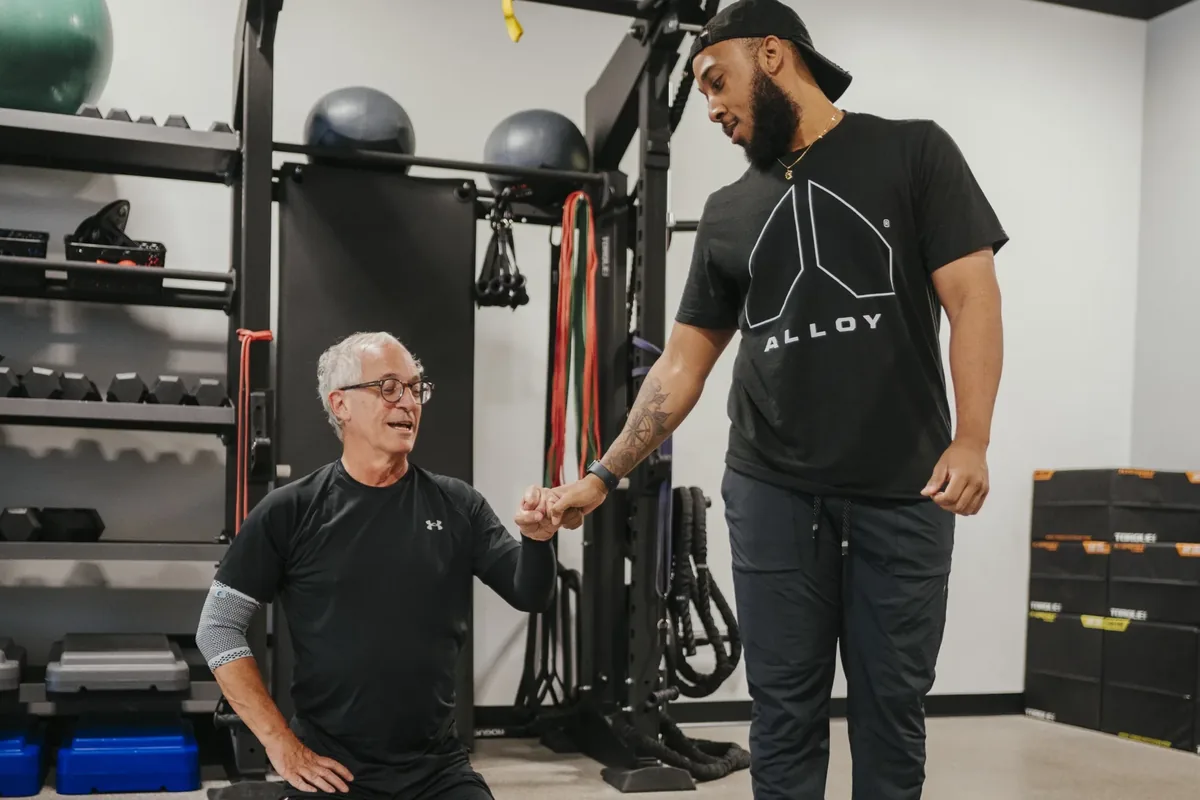
Showing up is half the job. The other half is progression: adding load at the right pace, adjusting a movement that doesn't suit you, and fixing form before it becomes a habit. That's where supervision earns its place.
A 12-week study of moderately trained men compared directly supervised resistance training with the same training done unsupervised. The supervised group gained significantly more squat and bench press strength, largely because their training loads went up faster.
The pattern holds for older adults. A meta-analysis of 11 studies in adults 65 and older found supervised training produced greater gains in muscle strength, power and balance measures than unsupervised training. The authors suggested making about two of every three weekly sessions supervised.
A 2025 randomized trial of 79 adults sharpened the comparison. Over 10 weeks, people training in person with supervision added 26.6 kg to their one-rep max squat, compared with 19.2 kg for an app-based plan and 19.4 kg for a self-guided PDF. Adherence was 88.2% with supervision and 52.2% for the self-guided group.
A class instructor can cue the whole room. What one shared workout can't do is progress each person's loads on their own timeline. That gap is what a coached small group fills, and it's also the main thing separating small groups from private sessions, which we compare in small group vs private training.
What the injury data actually says
High-intensity classes come up in any conversation about this choice, so here are the real numbers. Researchers using federal emergency-room data estimated about 3.99 million injuries tied to HIIT-style exercise from 2007 to 2016. The total climbed 144% over that decade as the workouts grew more popular, and knee and ankle sprains rose 125%.
The highest injury rates were in men ages 20 to 39, so this isn't a story about older adults. The researchers' recommendation was preparation and supervision. Read that as an argument for progressing at a pace matched to your body, whatever format you choose. It isn't a reason to avoid classes.
How to choose: a class, a small group or both
Colorado Springs has every kind of class option, from big-box gyms with full group schedules to boutique cycling and HIIT studios, CrossFit-style boxes, yoga studios and city rec centers. Any of them can be the right call. Here's an honest way to decide.
Choose a group class if:
- Music, energy and a fixed start time are what get you out the door.
- Your main goal is cardio, mood and an enjoyable hour, more than a heavier squat.
- Budget is the deciding factor right now.
- You've lifted for years, know your own form and can adjust a workout on the fly.
Choose small group personal training if:
- You want your strength to climb week over week, with tracked numbers to show it.
- You want someone correcting your form in real time.
- You're working around an old injury, a stiff shoulder or a long break that a one-size workout won't account for.
- You're past 40 and want a plan built around your history instead of the average person in the room.
Plenty of people do both. If you strength train three times a week, the older-adult research above suggests making about two of those sessions coached, and a class you love can fill the rest of your week.
Questions people ask
Does a group of six still feel social? Yes, and often more than a big class does. You train with the same few people at the same times, so you learn names and notice when someone's missing. That kind of consistency is what researchers tied to the strongest group results.
Can I keep my cycling or yoga class and add strength coaching? Yes. Many people keep a favorite class for cardio and enjoyment and add coached strength sessions for progression. Tell your coach about your class schedule so your strength program can account for it.
I've never lifted weights. Is small group training too advanced for me? No. Exercises and loads are set for each person, so a first-timer and a longtime lifter can train in the same session. You start with a Starting Point Session, so your coach knows your history and goals before your first workout.
How soon will I notice a difference? It varies from person to person. Most people notice improvements in energy, strength or confidence within the first few weeks of consistent training. Changes in body composition typically show over 8 to 12 weeks, and long-term results come from sticking with it.
Train in a group that knows you, on a plan built for you
If you want the pull of a group and a program that progresses with you, start with a conversation at our Woodmen Road studio. Your first visit covers your health history, your goals, an InBody body composition scan, a functional movement assessment and an introductory workout, so your first coached session is built around you.